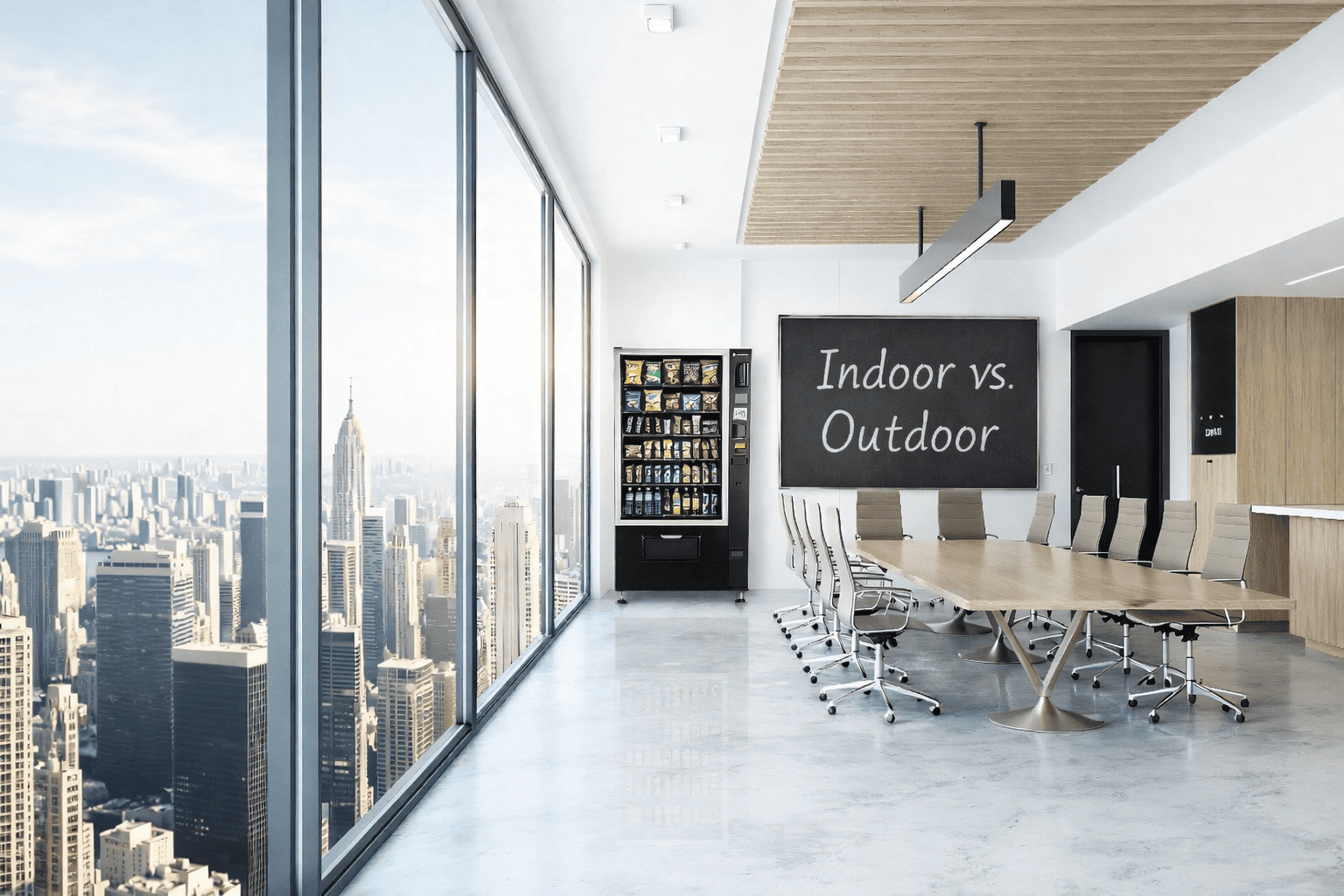
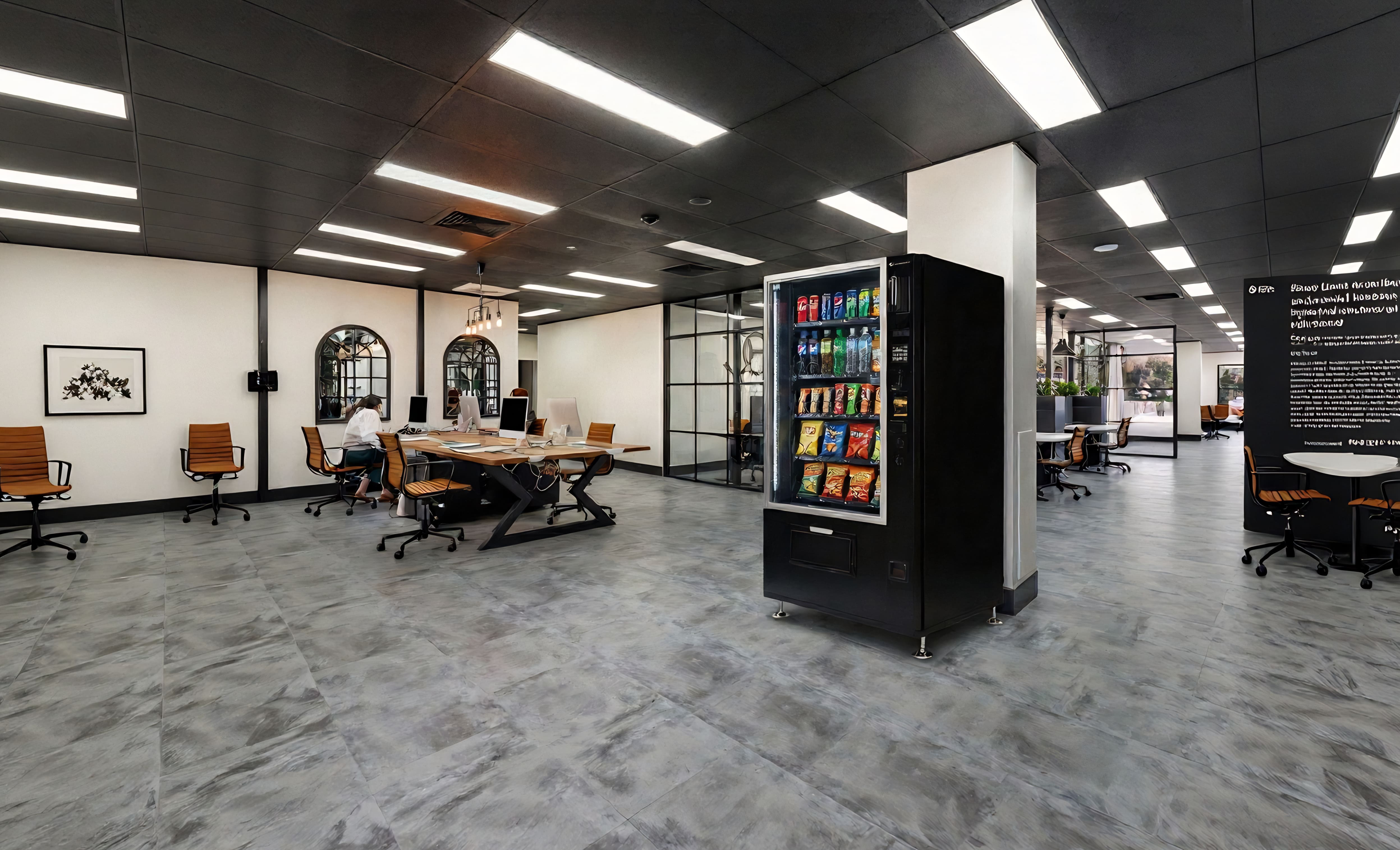
Whether a vending machine is operated indoors or outdoors makes a noticeable difference in practice. Both options can be economically viable – the key factor is which one better fits your possibilities, your day-to-day routine, and your location. Below is an objective, practical comparison.
Indoor Operation
Advantages
- No direct weather exposure – Rain, frost, heat, or strong sunlight are irrelevant.
- Significantly lower risk of vandalism – Enclosed or semi-enclosed spaces are deterrent and provide greater social control.
- More comfortable restocking and inspection – Fewer passersby, a protected environment, and more calm – especially important when handling cash or performing maintenance.
- Reduced wear on the machine – Fewer environmental influences usually mean a longer technical lifespan.
- Easier monitoring – Cameras are easier to implement since public areas are not being recorded.
- Often more favorable insurance conditions – Indoor operation is generally classified as lower risk by insurers.
- More stable power consumption – No extreme temperature fluctuations → more consistent electricity costs.
Disadvantages
- Often lower foot traffic – The customer base is usually more clearly limited (e.g., employees, visitors, tenants).
- Possible additional ongoing costs – Such as shared building insurance, higher rent, or heating costs.
- Cleanliness & order – Rented spaces often require additional maintenance effort.
Outdoor Operation
Advantages
- Maximum foot traffic – Public spaces, walkways, or highly frequented areas ensure high visibility.
- Strong advertising effect – The machine is permanently visible and noticed by new customers.
- Often very high profitability – Good outdoor locations are frequently among the highest-performing in terms of revenue.
Disadvantages
- Increased risk of vandalism – Secure anchoring and well-thought-out placement are especially important.
- Continuous weather exposure – Protection against rain, sun, frost, and heat must be actively planned.
- Restocking & inspection not always ideal – Heavy foot traffic or bad weather can complicate maintenance.
- Limited monitoring options – Cameras must not be directed at public areas.
- Greater wear and tear – Higher usage and stronger environmental influences affect the machine over time.
- Often higher insurance premiums – Outdoor operation is considered riskier.
- Fluctuating power consumption – Usually higher in summer and lower in winter, depending on environment and usage.
The Interesting Middle Ground: Covered Walkways, Arcades, Malls
A frequently underestimated option is semi-protected locations:
- arcades
- shopping centers
- corridors, passageways, entrance areas
- heavily frequented paths with a social environment
Here, the best of both worlds often comes together:
- high foot traffic
- protection from weather
- lower risk of vandalism
- manageable maintenance effort
In practice, such locations are often particularly efficient.
“My location isn’t perfect” – and that’s completely fine
The truth is: 👉 Very few locations are perfect.
That does not mean operating a vending machine there is not worthwhile. In many cases, vending machines are economically viable even at average locations, increase revenue, and improve local supply.
More important than perfection are:
- realistic expectations
- clean, professional execution
- continuous optimization
Focus on making the best of your location and working with the conditions you have. This is exactly how stable and successful vending machine locations are built over the long term.